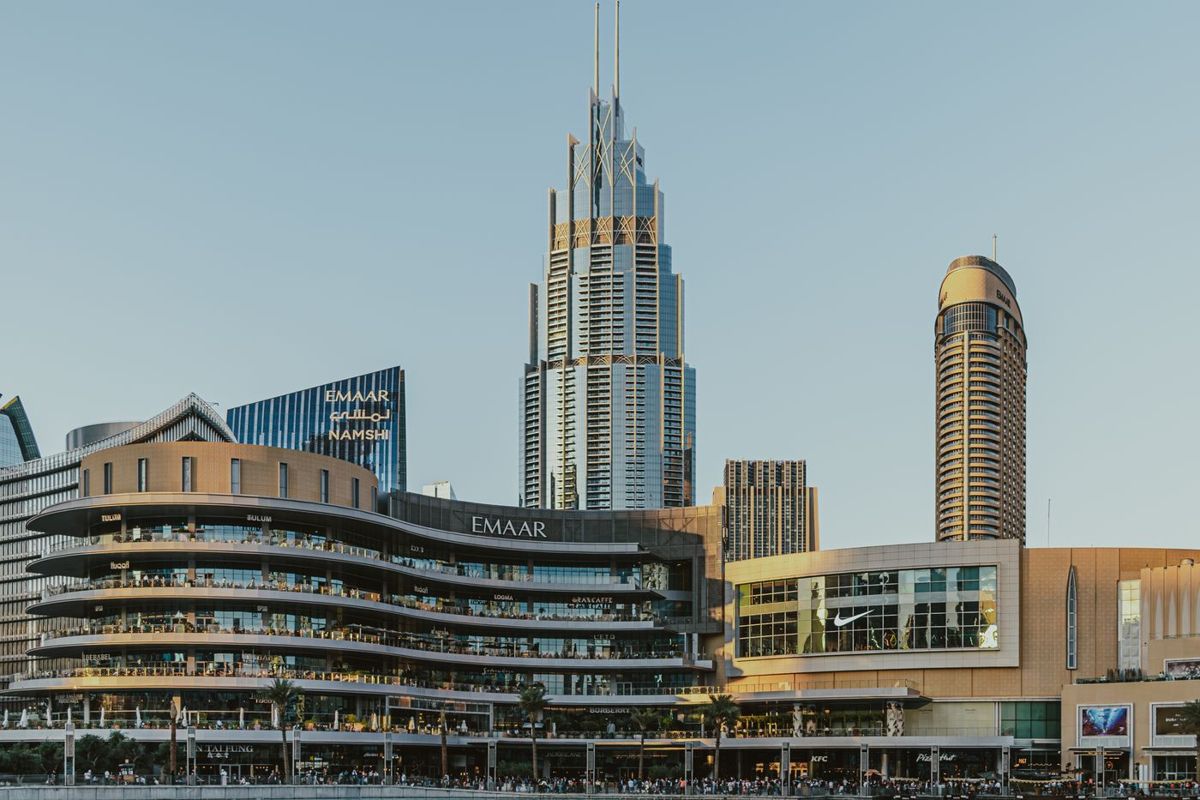
How Dubai Is Productizing Speed for Global Founders
Dubai’s advantage is not that every process is instant. It is that the city keeps turning delays between institutions into services that founders can use.
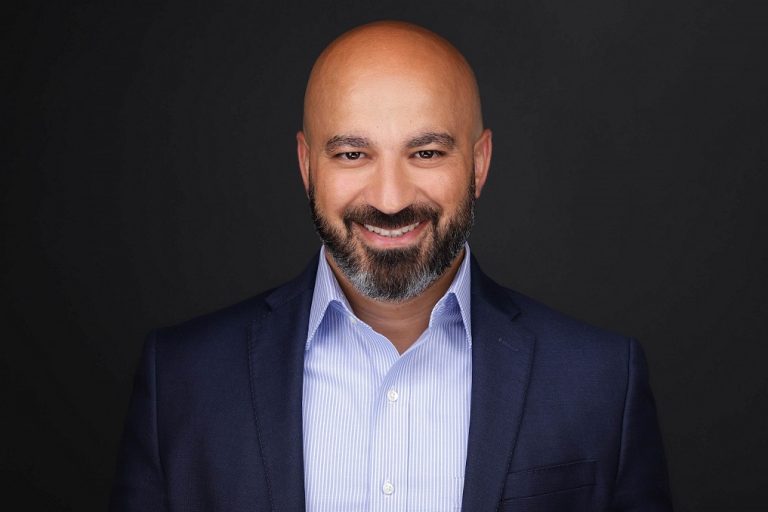
By Wael Handous, Founder and Group CEO, FRANK AI
Founders often describe Dubai as fast. That is true, but incomplete. Speed can be a burst of effort, a helpful official or a launch completed under pressure. None of those advantages is reliable enough to build a company around.
Dubai is doing something more useful. It is converting speed into infrastructure.
I think of this as productizing speed: taking a process that once depended on separate offices, repeated documents and private know-how, then redesigning it as a service with a clear entry point and reusable data. The founder does not merely move faster once. The whole company gains more chances to test, correct and grow.
The distinction matters because incorporation is only the first clock. A business must also open a bank account, establish residency, connect utilities, hire, import, collect payments and work with regulators. If each transition begins from zero, a fast licence becomes a good headline attached to a slow operating system.
One identity can remove weeks of coordination
The Dubai Unified Licence gives mainland and free-zone companies a common commercial identity. In November 2025, Dubai’s Department of Economy and Tourism reported that the initiative had cut average business bank account opening time from 65 days to five. More than 3,000 new accounts had been opened through the Service Providers Project, while over 134,000 business banking profiles had been updated. [1] The five-day figure is a reported average under the initiative, rather than a guaranteed opening time for every applicant.
The important point is not the banking statistic alone. A reusable commercial identity reduces the need for every provider to rebuild the same picture of a company. Verification becomes a shared layer rather than a fresh project.
For founders, this changes the cost of a handoff. Time can be lost between institutions, not only inside a single online form. A licence, bank, utility provider and labour service may each work efficiently while the company still waits because information does not travel between them. A common identity attacks that gap.
Business setup is becoming an operating product
Dubai has also started packaging services around the life of the business, not only its registration. The Department of Economy and Tourism launched SME in a Box in June 2026 with 18 private-sector partners. Its initial rollout covers licensing support, banking, payments, telecommunications, logistics and marketing, with deeper integration and automated onboarding planned for future phases. [2]
Dubai Chambers took a related step in July 2026 with its Business in Dubai platform. At launch, the platform provided access to 65 services through seven accredited partners across four categories: financial services; marketing and growth; technology; and testing, inspection and certification. [3]
Separately, Dubai Chamber of Digital Economy says it supported the establishment and expansion of 1,690 digital startups during 2025, and that 75 percent of those companies were international. [4] These figures describe the Chamber’s broader support during 2025, rather than results attributable to the platform launch announced in July 2026.
These initiatives reveal the practical meaning of institutional speed. A founder should not need to become an expert in the seams between systems. The service should carry the company across them.
This does not mean every founder has the same journey or that complex approvals disappear. Regulated activities still require proper review. Bank risk controls still matter. Free zones and mainland structures still have different implications. Productized speed is valuable because it makes the standard path clearer and leaves more attention for the exceptions that genuinely require judgement.
The model extends from licensing to trade
The same design appears in logistics. Dubai Trade brings customs, ports, permits, cargo handling and free-zone services into one digital window. By early 2024, it had passed 300 million transactions, served more than 180,000 traders and offered over 700 digital services. In 2023 alone, it processed 32.6 million transactions. [5]
That scale matters to a founder whose product includes physical goods, imports or regional distribution. A company’s speed is limited by its slowest external dependency. Digital marketing and automated sales do not help if customs documents, permits and cargo releases still move through disconnected queues.
Government integration is moving in the same direction. In April 2026, Dubai directed government entities to integrate individual and business services into a unified digital ecosystem within one year. [6] This was a directive for implementation, rather than confirmation that integration was already complete.
Separately, the General Directorate of Identity and Foreigners Affairs reported more than 70 million transactions completed using digital technologies and artificial intelligence during 2025, alongside more than 500 million government integration and linkage operations and nearly one million private-sector integration operations. [7] These figures indicate the scale of activity; they do not, on their own, measure the time saved by an individual founder.
The numbers are large, but the founder lesson is simple. Infrastructure creates value when systems exchange trusted information and an approved action can move to the next stage without manual reconstruction.
A four-part test for founders
Dubai can shorten the distance between decision and execution, but location does not repair a weak product. Founders should test whether the city’s operating environment creates an advantage that can scale beyond the UAE.
First, map one complete journey. Measure the time from deciding to enter the market until the first customer can be served and money can be collected. Include every external handoff, not only licence issuance.
Second, separate launch speed from operating speed. Ask whether the same environment accelerates hiring, banking, regulatory updates, payments, procurement and logistics after the opening announcement.
Third, count learning cycles. Faster setup is strategically useful only if it allows the company to test pricing, distribution or product assumptions sooner. The gain should appear in customer evidence, not merely in the date printed on a trade licence.
Finally, identify what travels. A scalable advantage may be a repeatable process, regional customer access, trusted data, intellectual property or a partner network. If the business works only because the founder personally navigates every relationship, the company has moved quickly without becoming portable.
Dubai’s strongest offer to global founders is not speed as theatre. It is the steady removal of coordination time from the business environment. The city is treating time as a form of economic infrastructure, then building services around it.
The useful question is therefore not how quickly a company can be announced. It is how many credible learning cycles the company can complete while slower organisations are still coordinating their first move.
Sources
Government of Dubai Media Office. Dubai Trade surpasses 300 million transactions. 1 February 2024.
Author bio
Wael Handous is the founder and Group CEO of FRANK AI in Dubai. His 18-year career spans enterprise technology, cybersecurity distribution and real-estate operations. He writes about practical AI, PropTech and the operating systems that help companies move from ambition to execution.
Disclosure
FRANK AI appears only as the author’s affiliation. Generative AI supported source discovery, drafting and editorial refinement. Wael Handous reviewed the argument, facts and sources and takes responsibility for the final text. This article is original, unpublished and non-promotional.
Featured image: Kate Trysh / Pexels.