From Culture to Capital: How UAE-Africa Creative Ties Are Redefining Soft Power and Economic Growth
By Arts Connect Africa
In the changing landscape of power, creativity has become capital. Perhaps nowhere more than in the deepening collaboration between the UAE and Africa, where the convergence of festival economies and creative-sector diplomacy creates new possibilities for trade, investment, and power.
Emerging networks like Arts Connect Africa (ACA), the Creative Africa Nexus (CANEX), and the Africa Soft Power Project are driving transformative trends in cultural collaboration. By fostering partnerships among artists, cultural institutions, and businesses, these initiatives create new job opportunities and enhance the vibrancy of local cultures. According to a recent report by the UNESCO Institute for Statistics, the global cultural and creative industries are projected to grow by 10% annually, highlighting a substantial opportunity for African economies to tap into this expanding market.
These collaborations empower communities by providing platforms for their work to gain international recognition, thus amplifying African voices. Additionally, through cultural exchange, these networks can address social and economic challenges more effectively, promoting innovation and resilience. A study from the African Development Bank suggests that cultural and creative industries could contribute up to 5% of Africa’s GDP by 2025, translating into billions of dollars and countless job opportunities. Ultimately, these partnerships have the potential to catalyze economic transformation and social progress across Africa, benefiting both local communities and the global landscape.
What began as a cultural exchange initiative has evolved into a cross-continent approach to innovation and development. The leadership of ACA has been instrumental in forging a new paradigm of creative diplomacy—where film festivals, fashion weeks, and art biennales are not simply platforms for cultural exhibition but launchpads for joint ventures, venture capital flows, and regional innovation hubs.
Consider, for instance, the strategic cooperation between Dakar and Dubai. While previously emblematic of soft-power deployment, their cooperation is now entwined in economic realities. Their collaboration with Senegalese design collectives has seen Dubai Design Week engage in twin exhibitions and licensing agreements that benefit both parties. Additionally, Dakar’s Black Rock artist residency has drawn in Emirati investors venturing into hybrid models of investment, involving patronage and equity.
This is not merely a case of business as usual; it represents a significant rebalancing of power. The creative industries are unlocking new trade corridors, exemplified by Lagos music producers co-creating soundscapes for UAE tourism advertisements, Emirati architects working alongside Ghanaian firms to design eco-pavilions, and fashion pop-ups in Nairobi bolstered by Abu Dhabi-based business accelerators.
The development of festival economies is at the heart of this shift. Festivals are no longer occasional, seasonal occurrences; they are functioning as economic ecosystems. For instance, the AfroLoud festival not only enhances cultural exchange but also stimulates local economies. It has been reported that festivals can contribute up to $1 million in local economic activity per event, engaging thousands of participants, including artists, attendees, and investors.
Creative initiatives embedded within broader economic strategies are driving a shift across both regions—moving engagement from symbolic gestures to sustainable, measurable outcomes, fueled by a blend of entrepreneurial energy, local leadership, and cross-continental collaboration.
Moreover, notable festivals like the Lagos Biennial and the March Meeting hosted by Sharjah Art Foundation attract thousands of international visitors, investors, and media representatives, facilitating essential business-to-business matchmaking, seed funding opportunities, and creative intellectual property export. These events serve as vehicles for shared knowledge and experiences while amplifying African creativity on a global scale. The World Economic Forum estimates that by 2030, Africa’s creative economy could reach a market value of $15 billion, provided proper investment and support mechanisms are in place.
Organizations like Arts Connect Africa (ACA) continue to play a crucial role in supporting and facilitating such cultural festivals, combining expertise and fostering collaboration among various stakeholders. Through these initiatives, ACA helps to unite artists and cultural institutions, encouraging innovative partnerships that drive economic growth and social progress.
What makes this model particularly effective is the layered approach of public-private partnerships. Governments invest in regulatory frameworks and diplomatic infrastructure, while private entities drive innovation. The result: creative free zones, co-branded intellectual property portfolios, and cross-listed cultural funds that demonstrate how soft power can be both strategic and economically productive.
For the UAE, this shift aligns perfectly with its ambition to diversify beyond hydrocarbons. Africa is young and vibrant in culture, offering a plethora of opportunities. And with ACA, the UAE is positioning itself as not just a funder or facilitator but as a co-creator.
Yet the true opportunity lies not simply in investment, but in co-creation, education of future creative professionals across the divide, shared innovation, and building sustainable ecosystems—such as creative free zones, cross-border residency programs, and incubators for cultural startups—that empower creative economies across the board.
In the future, the strategic value of UAE-Africa creative partnerships will continue to grow. The narrative is no longer one of cultural exportation; it is one of co-production of futures. And in that future, festivals are not just about art—they are about access, equity, and economic strategy.
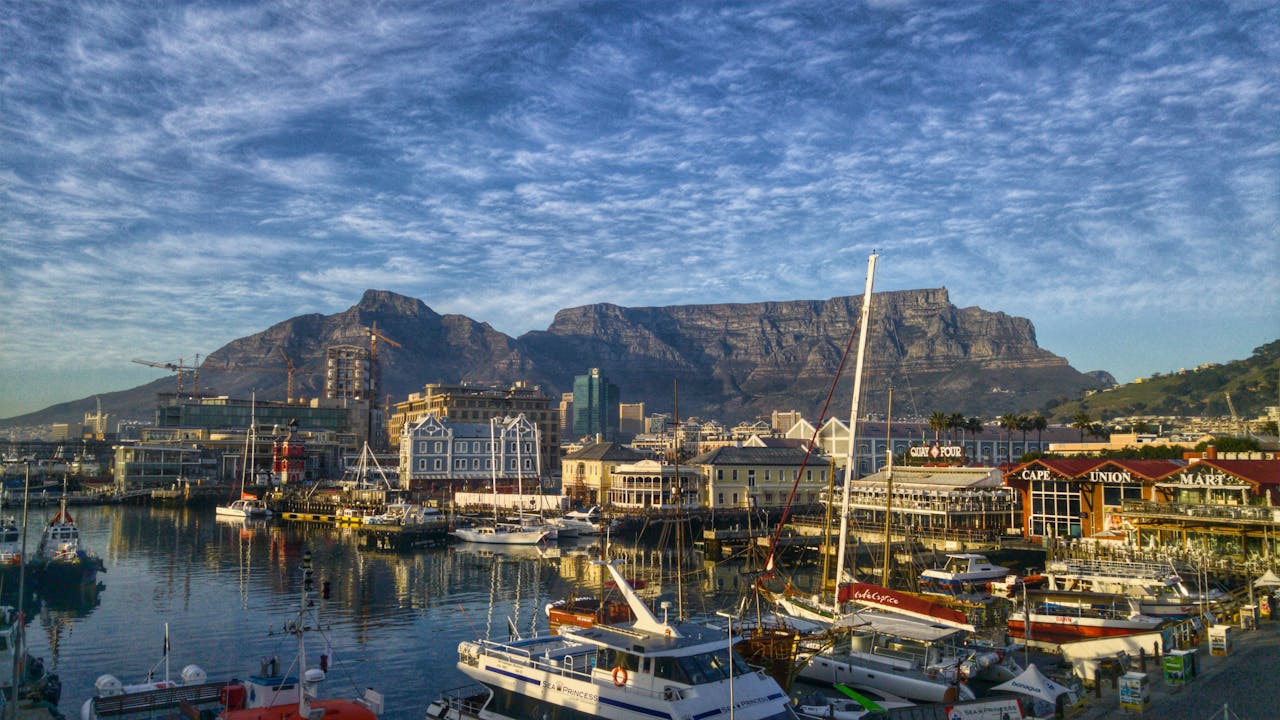
Photo: Cape Town, South Africa (Pixabay.com)